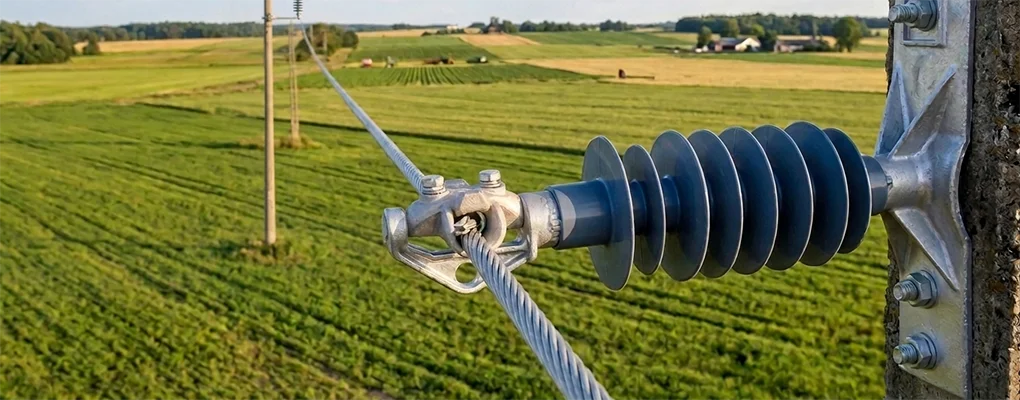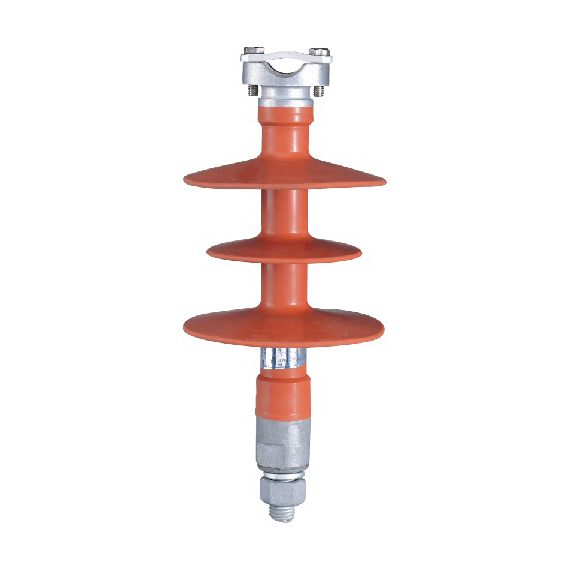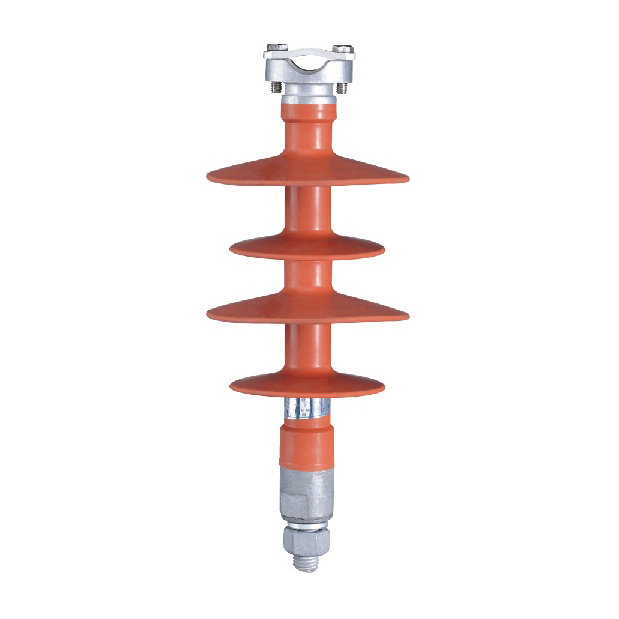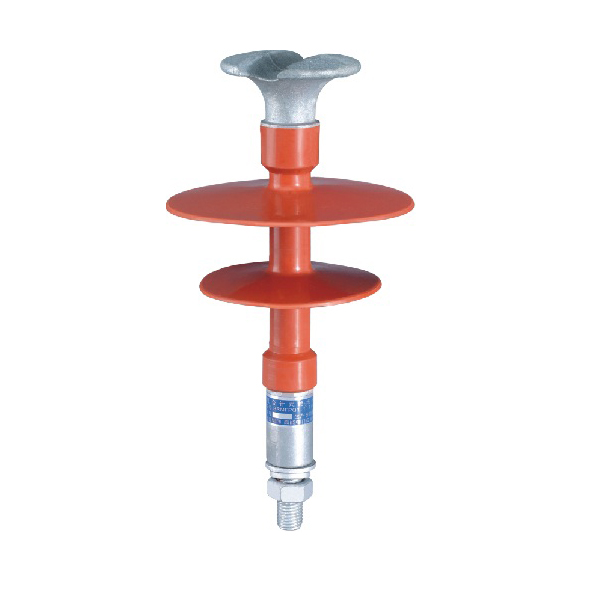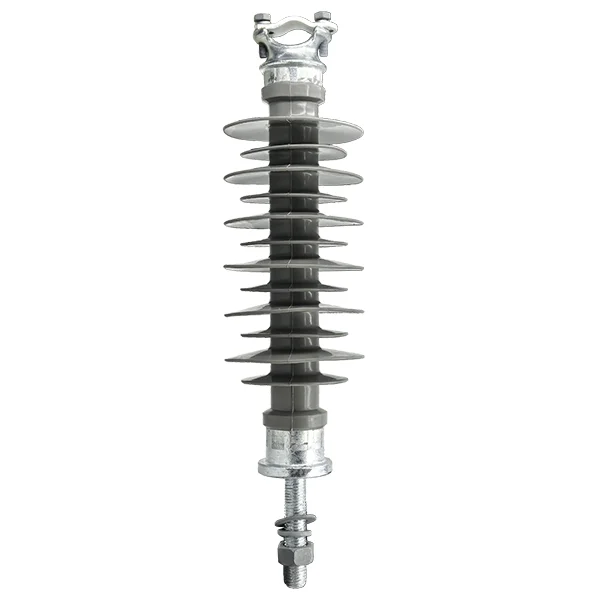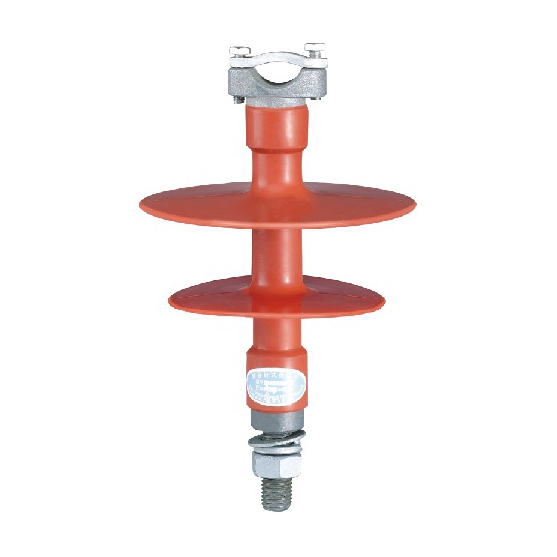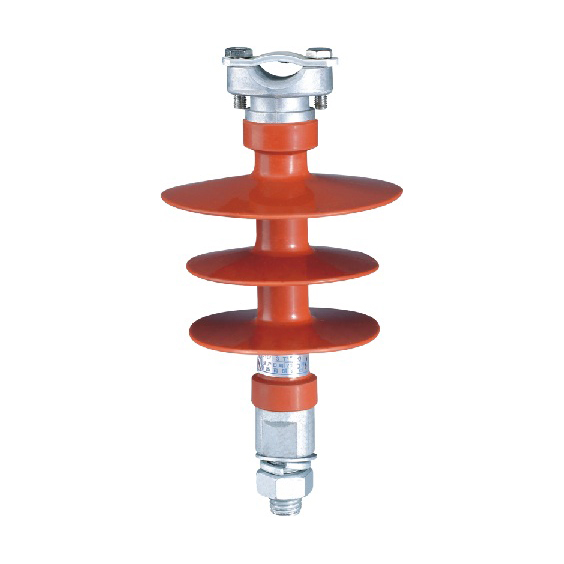


FPS-33/11
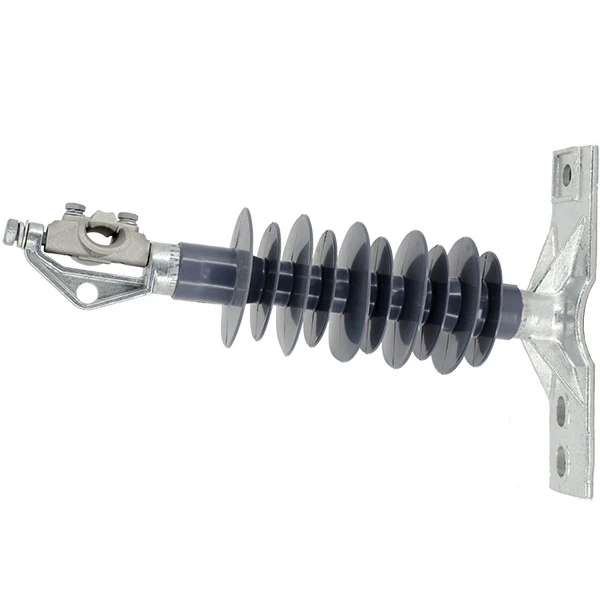
As a globally leading supplier of composite insulators, we realize full industrial chain production and strict quality control. All composite insulators manufactured by us fully comply with mainstream standards including GB/T, IEC and ANSI.
| Suspension Composite Insulators | Line Post Insulators, Pin Insulators | Station Post Insulators |
| GB/T 19519-2014 | GB/T 22079-2008 | GB/T 25096-2010 |
| IEC 61109:2025 | IEC 61952:2008 | IEC 62231-2006 |
| ANSI/NEMA C29.13-2020 | ANSI/NEMA C29.17-2022 | ANSI/NEMA C29.12-2020 |
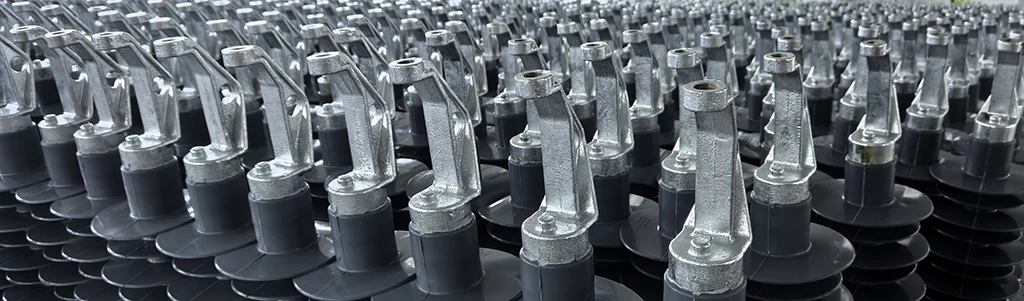
What is Composite Insulator
Composite Insulator, also known as polymeric insulator, rod insulator or silicone rubber insulator, is a key component used in power transmission and distribution systems to support conductors and insulate them from transmission towers. Different from traditional porcelain and glass insulators, it adopts polymer material technology, featuring light weight, high mechanical strength and excellent pollution resistance. It is widely applied in high voltage and extra high voltage transmission lines.
Compared with conventional porcelain or glass insulators, composite insulators possess prominent advantages:
Maintenance-free (Anti-pollution flashover): Thanks to the hydrophobic transfer property of silicone rubber, dust accumulated on the shed surface will not weaken the hydrophobicity of the insulator, greatly cutting maintenance costs;
Light Weight: Its weight is merely 1/7 ~ 1/10 of porcelain insulators. It lowers requirements for construction workers and equipment, and reduces load on steel towers;
Breakage Resistant: With outstanding toughness, it is not easy to get damaged during transportation and installation.
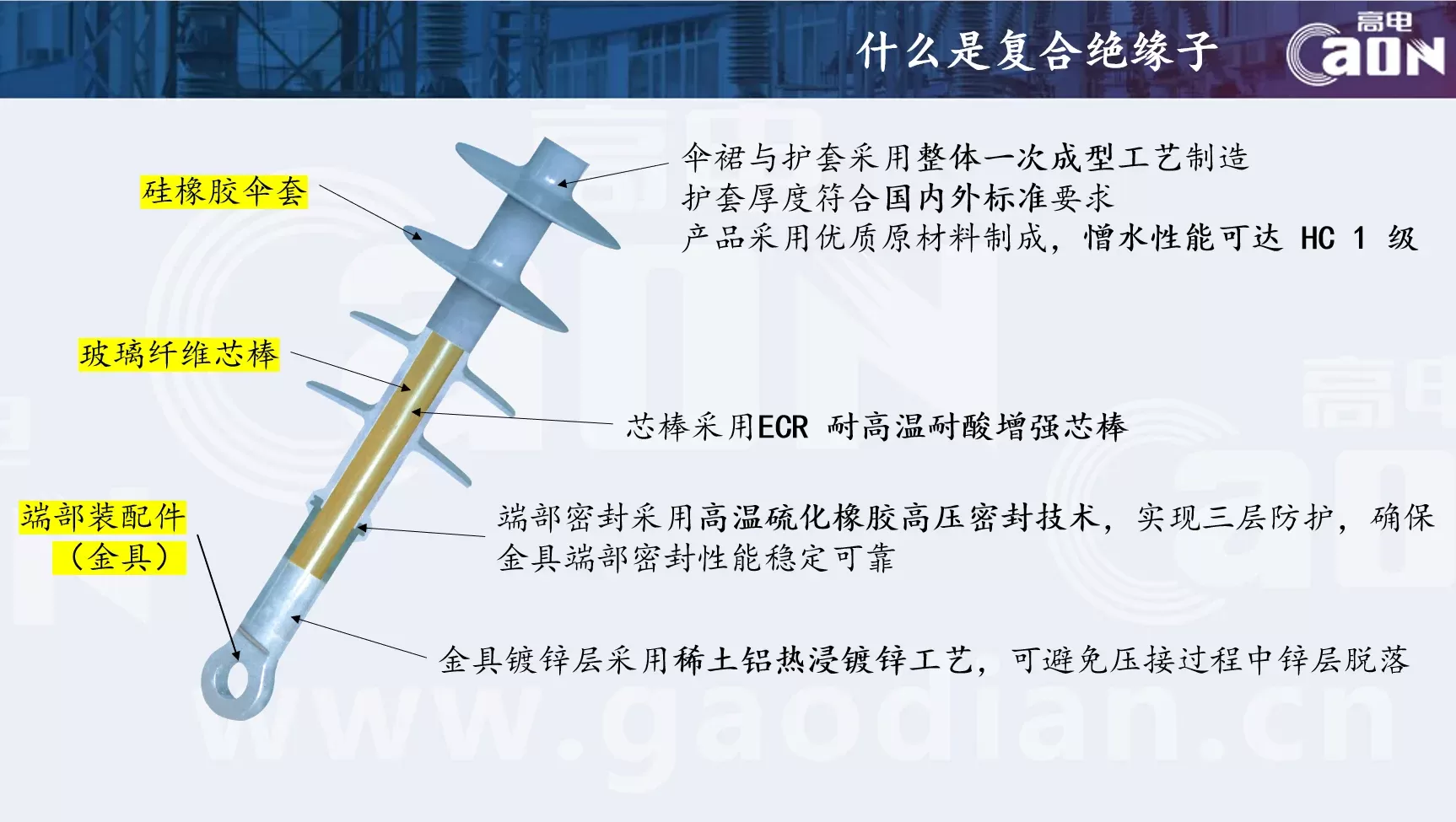
A composite insulator mainly consists of three parts below:
| Item | Housing / Shed | Core Rod | End Fittings |
| Material | High Temperature Vulcanized Silicone Rubber (HTV) | Epoxy Resin Impregnated Fiberglass Rod (FRP) | Hot-dip galvanized forged steel or ductile iron |
| Function | Extend the creepage distance to prevent surface leakage current. It features inherent hydrophobicity, effectively avoiding flashover under rainy, snowy or polluted conditions | Possess ultra-high tensile strength (higher than ordinary steel), withstand tensile or compressive load from conductors | Mounted on both ends of core rod for connecting insulators to steel towers and power conductors. |
Core Competitive Advantages
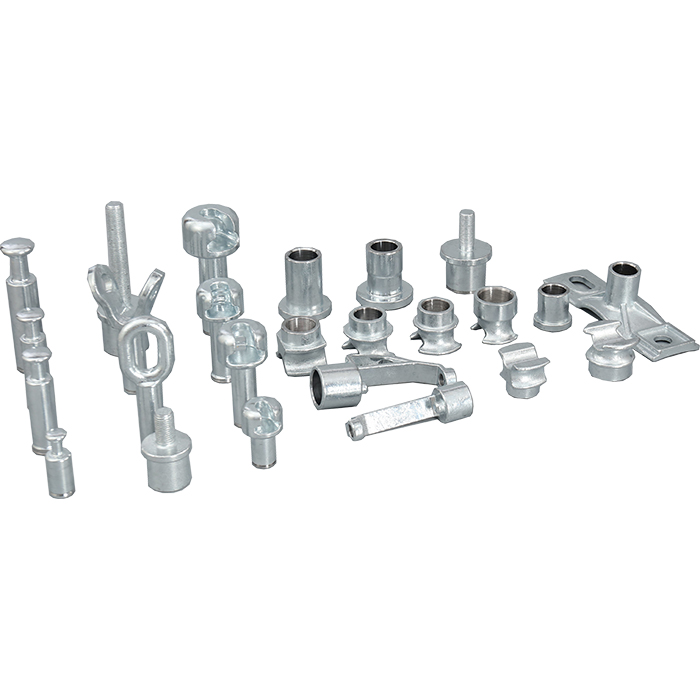
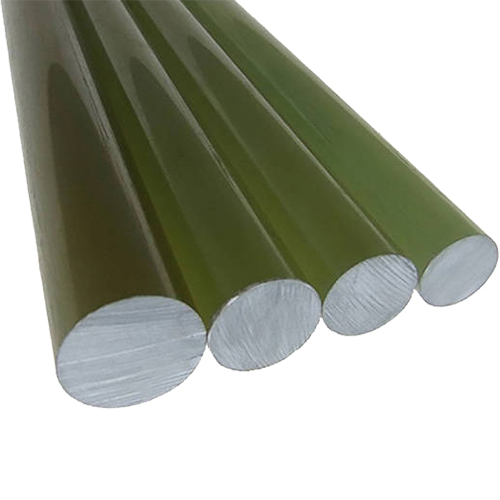
We stand out as a world-class composite insulator supplier. Instead of only assembling finished insulators, we independently produce insulator end fittings, FRP core rods and silicone rubber compound in-house.
Click links below to visit our digital workshop via 360° panorama and witness our manufacturing capacity on site.
| End Fittings | Core Rods | Silicone Rubber Compound |
|
|
|
Core Business: Manufacturing, sales and technical service of finished & semi-finished composite insulators. Meanwhile, we supply EPC turnkey projects for composite insulator production lines.
Global Presence: We have successfully built 7 insulator manufacturing factories in the following countries
South America: Argentina
Asia: Thailand, Turkey
Africa: Ethiopia, Morocco, Tanzania
Europe: Bulgaria
Main Application Fields
1. High Voltage & Extra High Voltage Transmission Lines
This is the primary application scenario for composite insulators.
Suspension & Tension Sets: On AC & DC transmission towers from 10kV up to 1100kV (UHV), composite insulators suspend conductors and bear tensile loads;
Compact Transmission Lines: Light weight and high mechanical strength make them ideal for urban lines or routes with limited corridor width;
2. Heavily Polluted and Rain-prone Areas
This is the core competitive field where composite insulators outperform porcelain and glass alternatives.
Coastal Regions: Resist salt fog corrosion;
Industrial Polluted Zones: In chemical plants, mines and other dusty regions, self-cleaning hydrophobic property effectively prevents pollution flashover accidents;
Rainy / Foggy Regions: Reduce leakage current under high humidity;
3. UHVDC Transmission Projects
Insulator contamination is more severe on long-distance DC transmission lines compared with AC lines.
Composite insulators demonstrate excellent resistance to electrical erosion under DC voltage, becoming the preferred solution for UHVDC projects (±800kV and above);
4. Substations & Distribution Networks
Composite Station Post Insulators: Applied for disconnectors and busbar supports inside substations, greatly improving seismic resistance of equipment;
Distribution Network Automation: Widely adopted in urban & rural 10kV - 35kV distribution networks for easy installation and maintenance-free operation;
5. Electrified Railway & Rail Transit
Catenary System: In railway overhead contact lines, composite insulators provide insulation and withstand mechanical stress caused by frequent pantograph vibration.